
10 lessons entrepreneurs can learn from Steve Jobs
📖Books,👨🏼💻iMagazine,⭐️Featured
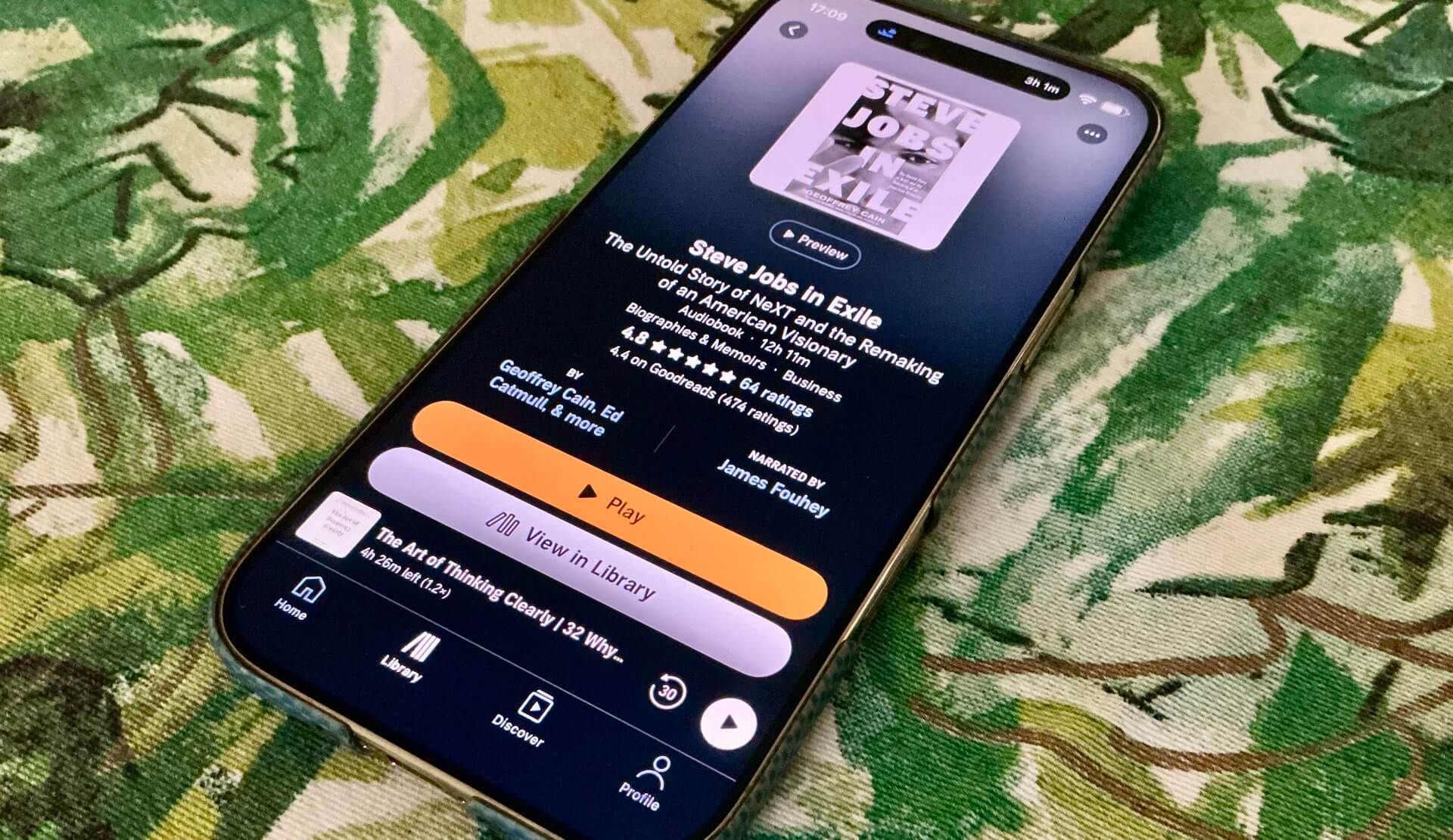
A few months ago I read the book by Geoffrey Cain “Steve Jobs in Exile: The Untold Story of NeXT and the Remaking of an American Visionary” (Amazon or Audible). It was a book about a 12-year period in the life of Steve Jobs when he was “between Apple”, meaning he was just ousted from the company he founded… only later to have Apple buy his company and welcome him back. Turns out Steve Jobs learned a lot in that time and came back to his beloved company a changed man. As the founder of Nozbe and an entrepreneur myself, I’ve discovered 10 lessons all business owners can learn from Steve.
- Lesson 1. Focus on your product first and on branding later.
- Lesson 2. Be disciplined about costs or your business will fail.
- Lesson 3. Create value for your customers rather than obsessing over your competition.
- Lesson 4. Target price is your constraint and guiding star.
- Lesson 5. Iterate and ship your product. Don’t seek perfection.
- Lesson 6. Develop people. Hire the best and help them thrive!
- Lesson 7. Challenge people and inspire them to challenge you.
- Lesson 8. In negotiation, use the “anchoring” technique.
- Lesson 9. Always be professional. Even if you don’t feel like it.
- Lesson 10. Accept free publicity. Even if you don’t care for it.
- Steve Jobs learned from his mistakes and got back to Apple!
Lesson 1. Focus on your product first and on branding later.
Steve was pushed out of Apple and he founded his new company called “NeXT”. He was thinking of building a computer for the education market but was still in the early days… so his first order of business was paying a famous designer $100K for a fancy new logo. This is a very common mistake business owners make. Focusing on the appearance of your business and the branding before you even have any kind of business at all. In the first few years, any way you’d write the word “NeXT” would be good enough for a logo and the focus of Steve should have been on the product itself. Logos can always be redesigned later. The logo of my company, Nozbe, has changed several times over the last 20 years and it’s OK.
Lesson 2. Be disciplined about costs or your business will fail.
Similar to the first lesson, elevated costs can sink a business. Fancy office, expensive computers and office furniture can be helpful, but again, it doesn’t help with product development. Every new business should first focus on product-market-fit so it is in their interest to spend as much money on the product as possible and as little on overhead. Steve Jobs was buying $10K chairs and building exquisite staircases while his product development was lacking funding. Every business book tells you that cash is king, so watching your cashflow should be the most important thing at all times, but especially at the beginning. I launched my startup to the public from my living room, without any staff… as I didn’t know if anyone beside myself would use my productivity software product.
Lesson 3. Create value for your customers rather than obsessing over your competition.
Many businesses are obsessed with their competitors too much. Steve Jobs wanted badly to stick it to Apple. He was too focused on outdoing Apple. Being better than them. It resulted in many mistakes in product development. He wanted his new computer, NeXT Cube to be better than Mac in every aspect. Most of the problems with his computer resulted from this obsession.
I remember a few years back we had a crisis of identity at Nozbe, when we compared our product against our competitors. I thought that because they had so many more features, our prospective customers would never choose us. Well, the customers that came told us that they tested our competitors, but preferred our simpler way of getting things done in a team. They chose our focused design and easy-to-use interface.
Lesson 4. Target price is your constraint and guiding star.
Steve Jobs knew he had to build a $3k computer yet he over-engineered it and the price skyrocketed to $6.5K for a base version without a hard drive. He knew what his customers cared about yet he focused on what he cared about, like a perfect-cube shape, magnesium alloy, which was difficult to manufacture, or custom painting which none of his customers asked for.
We’ve raised prices of Nozbe over the years, yet we know we need to remain affordable for our target market of solopreneurs and small businesses.
Lesson 5. Iterate and ship your product. Don’t seek perfection.
Steve Jobs wanted to build a perfect computer. He would have succeeded earlier if he built the promised $3k computer for education first and then iterated on the concept. Yet he was seeking perfection. He wanted to build a perfect cube, an amazing computer, a better-than-Apple machine. This resulted in them not shipping the computer on time and alienating many potential customers.
Especially in my industry, in software, shipping fast and getting feedback from customers is very important. I am obsessed with reducing the scope of features to be able to ship them as soon as we can.
Lesson 6. Develop people. Hire the best and help them thrive!
Steve Jobs in the beginning was firing people left and right. Whenever he was not happy with someone’s performance he’d fire them right away without actually acknowledging their past contributions at all. He’d first motivate people only to later fire some of them on a whim and let others walk away seeing such behavior.
Only later he learned that his job as the company owner is to work FOR his smart people to create an environment where they can do their brilliant stuff. Most people who worked with him in 1995, shortly before NeXT was acquired by Apple, stayed with him until his untimely death.
Tom, Nozbe’s CTO, joined me as a college student. We’re still working together after all these years and I think it’s because my job was never to manage him but to help him grow into a tech lead he’s become.
Lesson 7. Challenge people and inspire them to challenge you.
Steve was very well known for challenging people. He didn’t respect people who’d not challenge him, however in the beginning of his NeXT career people very often would be too frightened to do that. Because he’d simply fire them on the spot if they were too difficult. Through his partnership with Ed Catmull at Pixar and some of the brilliant engineers at NeXT he learned to appreciate people standing up to him and channel his energy into debating them in an effort to improve the product and not fight whose ego is bigger.
At Nozbe when we design our app, we debate all the features together and we challenge each other all the time. Just because I’m the company owner, I don’t have the last say. I, as much as anyone else, must sell the idea to the team first.
Lesson 8. In negotiation, use the “anchoring” technique.
When Steve Jobs invited the then-CEO of Apple, Gil Amelio, to his house to negotiate the sale price of NeXT to Apple, he quickly “anchored” the price. This means he set the price at the level he wanted so that Gil had to work from that price. He told Gil that he wanted to sell at a price of $12 per share to which Gil responded that it was too high… but he only lowered it to $10, $2 less than the asking price, which resulted in a sale for more than $400M. In any price negotiation, the side that sets the “anchor” first usually wins.
Luckily most Nozbe customers are small businesses and I don’t need to negotiate enterprise deals, but every now and then when a bigger company asks for a quote, our base single user monthly price for a premium account is the “anchor”.
Lesson 9. Always be professional. Even if you don’t feel like it.
Steve Jobs lost many opportunities because he wasn’t very professional in his behavior. The author of the book describes many situations in which he could have received additional funding or acquired a customer had he shown up to the meeting in a professional way. Very often he just didn’t show. And when he did, he completely overplayed his hand by being too arrogant. This way he alienated many people who didn’t want to do business with him anymore after stunts like these.
As the founder of Nozbe, very often I agree on meetings or guest appearances for the benefit of my company. Later I may realize that some of these are not very interesting anymore, but I attend them anyway and I try to be as professional as possible, because running a business is a marathon and people will remember you for the way you made them feel.
Lesson 10. Accept free publicity. Even if you don’t care for it.
Did you know that the famous games by id Software - Doom and Quake - were developed on NeXT machines? Neither did I. Turns out they were! And the founders of id Software wanted to give NeXT free publicity by highlighting that the games were developed on these computers. Steve Jobs didn’t understand gaming much and of course he had no idea these games would become some of the most important titles in gaming history. So he said no. Later, when he realized what kind of an opportunity they missed, he contacted the game developers, but “the ship has sailed” they said.
Publicity is precious. If you can get it for free and it’s kind of publicity that is not strictly against your values, take it. I know I’ve missed on quite a few opportunities in the past which I’d love to be a part of now.
Steve Jobs learned from his mistakes and got back to Apple!
The culmination of Steve Jobs’s story in this book was his way back to Apple. When Apple was shopping for a new Operating System, they were deciding between NeXTSTEP by Steve Jobs and BeOS by former Apple executive, Jean-Louis Gassée. Steve learned from his journey at NeXT and didn’t assume he was an obvious candidate. He came prepared with a great presentation and also showcased the engineering prowess of his VP of software, Avie Tevanian. He addressed all the concerns Apple had, he was patient and careful while still being a charismatic showman. It was Jean-Louis who was arrogant and thought Apple had no choice but to go with his solution. It was Steve who beat him by being a better version of himself.
The fact that he got Apple to buy his company and later led Apple to such hits like iMac, iPod and iPhone, shows us that he’s learned a lot in his time between Apple. Come to think of it, every Mac, iPhone, iPad and Apple Watch since 2001 runs on the foundation Jobs over-engineered at NeXT. Isn’t that amazing?
What have you learned from Steve Jobs? Which lessons you could apply in your business right away? Contact me via email or on social media and let me know!